Morocco Official Language: 7 Amazing Facts About Languages Spoken in Morocco
Discover Morocco’s official languages and rich cultural heritage. In addition, learn about Moroccan Arabic, Amazigh, French, Spanish, and English. This complete guide also includes useful expressions for your next Moroccan adventure.

What is the official language of Morocco? Arabic and Amazigh are the country’s two official languages. However, everyday communication includes several other languages. For example, Moroccan Arabic, known as Darija, is widely spoken. Meanwhile, French, Spanish, and English are useful in different professional and tourism settings.
1. What Are the Official Languages of Morocco?
The Kingdom of Morocco officially recognizes two languages: Arabic and Amazigh. According to Article 5 of the Moroccan Constitution, both languages form part of the country’s national identity.
Arabic plays an important role in formal communication and education. Meanwhile, Amazigh represents Morocco’s longstanding Indigenous heritage. Together, these languages reflect the nation’s diverse history and cultural traditions.
Although French is widely used in Morocco, it is not an official language. Similarly, English and Spanish have important roles in tourism and international communication.
For further details, consult the Moroccan Constitution .
2. Arabic in Morocco: Modern Standard Arabic and Darija
Arabic is an essential part of Moroccan society. Nevertheless, the Arabic used in official documents differs from the language heard in daily conversations.
Modern Standard Arabic in Morocco
Modern Standard Arabic is commonly used in government publications, formal education, and news broadcasts. Furthermore, it connects Morocco with other Arabic-speaking countries.
Although many Moroccans understand formal Arabic, everyday conversations often take place in Darija. As a result, visitors may notice differences between written Arabic and spoken Moroccan Arabic.
What Is Moroccan Darija?
Moroccan Darija is the everyday Arabic variety spoken by a large part of Morocco’s population. For example, you will hear it in markets, cafés, restaurants, and family conversations.
Over time, Darija developed distinctive pronunciation, vocabulary, and grammar. Moreover, it includes influences from Amazigh, French, Spanish, and other languages.
What Language Is Spoken in Marrakech?
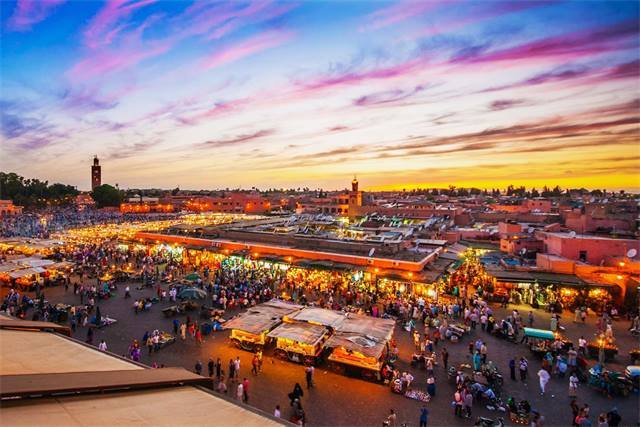
Darija is widely spoken throughout Marrakech. In particular, visitors hear it in Jemaa el-Fnaa, traditional souks, and local neighborhoods.
However, French and English are also used in many hotels and tourism businesses. Additionally, Amazigh languages remain important in nearby communities.
Therefore, travelers can explore Marrakech without speaking Arabic. Nevertheless, learning basic Darija can make local interactions easier.

3. Amazigh Language in Morocco: Tamazight and Cultural Heritage
Amazigh, also known as Tamazight, represents an important part of Morocco’s Indigenous identity. In fact, Amazigh languages have been spoken across North Africa for many centuries.
Today, these languages remain important in the Atlas Mountains, Rif Mountains, Souss region, and many Moroccan cities. Furthermore, their official recognition supports the preservation of local traditions.
Major Amazigh Languages Spoken in Morocco
Tachelhit (Tashelhit)
Tachelhit is widely spoken in southern Morocco. For example, it is common in the Souss region, Anti-Atlas, and parts of the High Atlas Mountains.
Central Atlas Tamazight
Central Atlas Tamazight is spoken in several mountain communities. In particular, it is associated with areas around Azrou, Khenifra, and the Middle Atlas.
Tarifit (Riffian)
Tarifit is primarily associated with northern Morocco. For instance, many speakers live around Nador, Al Hoceima, and surrounding Rif communities.
Standard Moroccan Amazigh
Standard Moroccan Amazigh supports education and public communication. Moreover, its development helps strengthen the visibility of Amazigh language and culture.
What Is the Tifinagh Alphabet?
Tifinagh is a writing system associated with Amazigh languages. Today, Neo-Tifinagh appears in Moroccan educational materials and public signage.
For example, visitors may notice Tifinagh alongside Arabic on government buildings and cultural institutions. Consequently, the writing system has become an important symbol of Amazigh identity.
To learn more, visit the Royal Institute of Amazigh Culture .

Amazigh Culture in Morocco’s Mountains
Morocco’s mountain communities preserve distinctive cultural traditions and languages. Moreover, local architecture, music, and hospitality reflect centuries of regional heritage.
Visitors can discover these traditions through guided village excursions. In addition, local experiences offer valuable insight into everyday life.
As a result, exploring the Atlas or Rif Mountains can deepen your understanding of Morocco’s cultural diversity.
4. Is French an Official Language in Morocco?
French is not an official language of Morocco. However, it remains widely used in business, commerce, education, and tourism.
Historically, French became influential during the French protectorate period. Although Morocco gained independence in 1956, the language continued to play an important professional role.
Where Is French Spoken in Morocco?
French is especially useful in major cities such as Casablanca, Rabat, Marrakech, Fes, and Agadir. For example, many hotels and restaurants provide French-language services.
In addition, some businesses and professional institutions use French regularly. Nevertheless, proficiency varies between individuals, generations, and regions.
Therefore, travelers should not assume that every Moroccan speaks French. Instead, using simple Darija expressions or asking for language assistance can be helpful.
5. Do Moroccans Speak English or Spanish?
English in Morocco
English is increasingly used in Morocco’s tourism industry. For example, many hotels, travel agencies, and tour guides provide services in English.
Furthermore, English is studied by many younger Moroccans. Consequently, international visitors may find English useful in major tourist destinations.
However, English proficiency varies across the country. In smaller villages, communication may require translation assistance or a knowledgeable local guide.
Spanish in Northern Morocco
Spanish has historical connections with northern Morocco. In particular, some residents of Tangier, Tetouan, Nador, and nearby communities speak Spanish.
Additionally, Spanish is useful in tourism businesses serving travelers from Spain and Latin America. Nevertheless, its use is not equally widespread throughout Morocco.
Hassaniya Arabic in Morocco
Hassaniya is an Arabic variety associated with Saharan communities. Moreover, Morocco’s Constitution recognizes Hassani as part of the country’s cultural heritage.
Therefore, Morocco’s linguistic identity extends beyond its two official languages.
Explore Morocco’s Multilingual Culture Through Its Destinations
Morocco’s cultural diversity becomes clear when traveling between regions. For instance, Marrakech offers lively souks and traditional architecture. Meanwhile, Chefchaouen is known for its distinctive blue streets.
In addition, northern mountain communities preserve regional traditions and languages. Together, these destinations showcase Morocco’s varied heritage.


6. What Languages Are Spoken in Different Regions of Morocco?
Language use varies between Moroccan cities and regions. For example, Darija is common in many urban areas, while Amazigh languages remain important in several mountain and southern communities.
Furthermore, French and Spanish have different regional influences. Therefore, the following table offers a practical overview for international travelers.
| Destination | Languages Commonly Encountered |
|---|---|
| Marrakech | Darija, Amazigh, French, English in tourism |
| Casablanca | Darija, French, English in some settings |
| Rabat | Darija, Amazigh, French, English |
| Fes | Darija, Amazigh, French |
| Agadir | Tachelhit, Darija, French |
| Middle Atlas | Central Atlas Tamazight, Darija |
| Rif Mountains | Tarifit, Darija, Spanish in some communities |
| Tangier | Darija, Spanish, French, English |
| Chefchaouen | Darija, regional Amazigh varieties, tourism languages |
| Merzouga | Darija, Amazigh varieties, tourism languages |
| Saharan communities | Hassaniya and other regional languages |
Language use differs between individuals. Therefore, this table should be treated as a general travel guide rather than a strict linguistic map.
7. Essential Moroccan Arabic Words and Phrases for Tourists
Learning a few Moroccan expressions can improve your travel experience. For example, simple greetings help create friendly interactions with local people.
Moreover, basic Darija phrases are useful when shopping, ordering food, or asking for directions. As a result, travelers can communicate more confidently.
| English | Moroccan Darija | Arabic Script |
|---|---|---|
| Hello | Salam | سلام |
| Welcome | Marhba | مرحبا |
| Thank you | Shukran | شكرا |
| Please | Afak | عفاك |
| Yes | Iyyeh | إيه |
| No | La | لا |
| How are you? | Labas? | لاباس؟ |
| How much? | Bshhal? | بشحال؟ |
| Where? | Fin? | فين؟ |
| Water | Lma | الما |
| Goodbye | Bslama | بالسلامة |
| That’s enough | Safi | صافي |
Pronunciation and informal spelling vary between Moroccan regions.
How Do You Say Hello in Morocco?
The word Salam is a common greeting. Alternatively, you can say Salam alaykum. Both expressions are widely understood.
How Do You Say Thank You in Morocco?
Moroccans commonly say Shukran to express thanks. For example, you can use this word in restaurants, markets, hotels, and everyday conversations.
How Do You Ask for a Price in Moroccan Arabic?
The expression Bshhal? means “How much?” Therefore, it is especially useful when shopping in traditional souks.
Can You Travel Around Morocco Speaking Only English?
Yes, many international visitors travel around Morocco using English. In particular, major tourist destinations offer numerous English-speaking services.
However, communication may become more difficult in rural areas. For this reason, a local guide can help travelers understand regional languages and traditions.
Practical Language Tips for Visiting Morocco
Learn Basic Darija
Start with greetings and polite expressions. For example, learn Salam, Shukran, and Afak before arriving in Morocco.
Save Important Addresses
Keep your accommodation address available on your phone. Additionally, saving the address in Arabic or French may help when communicating with drivers.
Use Offline Translation
Download translation tools before your journey. Consequently, you can access useful phrases even when internet coverage is limited.
Travel With Local Experts
Professional local guides can explain cultural traditions. Furthermore, they can help visitors communicate with different communities.
Discover Morocco’s Languages and Culture With Package Morocco
Understanding Morocco’s languages adds depth to any cultural journey. For instance, exploring Marrakech introduces travelers to traditional souks and local conversations.
Meanwhile, the Atlas Mountains offer opportunities to discover Amazigh traditions. In addition, Sahara Desert journeys introduce visitors to southern Moroccan hospitality and heritage.
Package Morocco offers private travel experiences across the country. Therefore, visitors can discover historic cities, mountain landscapes, and desert destinations at their own pace.
Explore More Morocco Travel Guides
Frequently Asked Questions About Morocco’s Official Languages
What are the two official languages of Morocco?
Arabic and Amazigh are the two official languages of Morocco. Both are recognized by the Moroccan Constitution of 2011.
What language do Moroccans speak every day?
Moroccan Darija is widely spoken in daily life. However, Amazigh languages are also important in many communities.
Is Moroccan Arabic the same as standard Arabic?
No. Moroccan Darija has distinctive pronunciation, grammar, and vocabulary. Therefore, it differs considerably from Modern Standard Arabic.
Is French an official language in Morocco?
No. French is widely used in business and tourism. Nevertheless, Arabic and Amazigh remain the official languages.
Do people speak English in Marrakech?
Yes. English is used in many hotels and tourism businesses. However, proficiency varies between individuals.
What is the Amazigh language?
Amazigh refers to Indigenous North African languages. For example, Morocco has Tachelhit, Central Atlas Tamazight, and Tarifit.
What language is spoken in Chefchaouen?
Darija is widely spoken. Additionally, visitors may encounter regional Amazigh languages and foreign languages used in tourism.
What language is spoken in the Sahara Desert?
Language use depends on the community. For example, travelers may encounter Darija, Amazigh varieties, and Hassaniya.
Do I need to speak Arabic to visit Morocco?
No. Many travelers visit Morocco without speaking Arabic. Nevertheless, learning basic Darija can improve communication.
How do Moroccans say thank you?
Shukran means thank you. Therefore, it is a useful expression for travelers throughout Morocco.
Discover the Real Morocco
Explore historic cities, Amazigh villages, traditional markets, and spectacular desert landscapes. Moreover, experience Moroccan hospitality with knowledgeable local travel professionals.
Plan a private Morocco tour designed around your interests, travel dates, and preferred destinations.
Explore Morocco Private ToursFinal Thoughts: Morocco’s Official Languages and Cultural Diversity
Morocco’s official languages, Arabic and Amazigh, reflect the country’s rich history. Meanwhile, Moroccan Darija remains widely used in everyday communication.
Furthermore, French, Spanish, English, and regional languages contribute to Morocco’s multilingual identity. As a result, travelers can experience different cultural traditions across the country.
Whether you explore Marrakech, visit the Atlas Mountains, or discover the Sahara Desert, learning a few local expressions can enrich your journey.
For more cultural experiences and personalized travel ideas, visit Package Morocco .
Amazing experience
We had an amazing time during the trip ..we were 8 people with kids ( family and friends ) our tour guide Saiid was amazing ..he was very knowledgeable, humouous , flexible and most importantly safe driver .he has good…




 Addi
 Saaid
 Mohamed
 Yousef
 Wrou
 Hassan