
Desert Animals in the Sahara: Wildlife of Morocco’s Desert
Desert Animals in the Sahara
The Sahara Desert is one of the most extreme environments on Earth, yet it is home to a surprising variety of wildlife. Covering vast areas of North Africa, including southeastern Morocco, the Sahara supports many unique species that have adapted to survive intense heat, scarce water, and shifting sand dunes.
For travelers visiting the Sahara Desert during a Morocco tour, spotting desert wildlife adds an exciting dimension to the experience. From the iconic dromedary camel to elusive fennec foxes and fascinating reptiles, the Sahara is a living ecosystem filled with remarkable creatures.
Why Animals Can Survive in the Sahara
Desert animals have developed extraordinary adaptations that allow them to thrive in harsh conditions:
- Conserving water for long periods
- Being active during cooler nighttime hours
- Burrowing underground to escape extreme heat
- Storing fat reserves for energy
- Specialized body structures for moving across sand
These survival strategies help Sahara wildlife endure temperatures that can exceed 50°C (122°F) during summer.
The Most Famous Desert Animals in the Sahara
Dromedary Camel
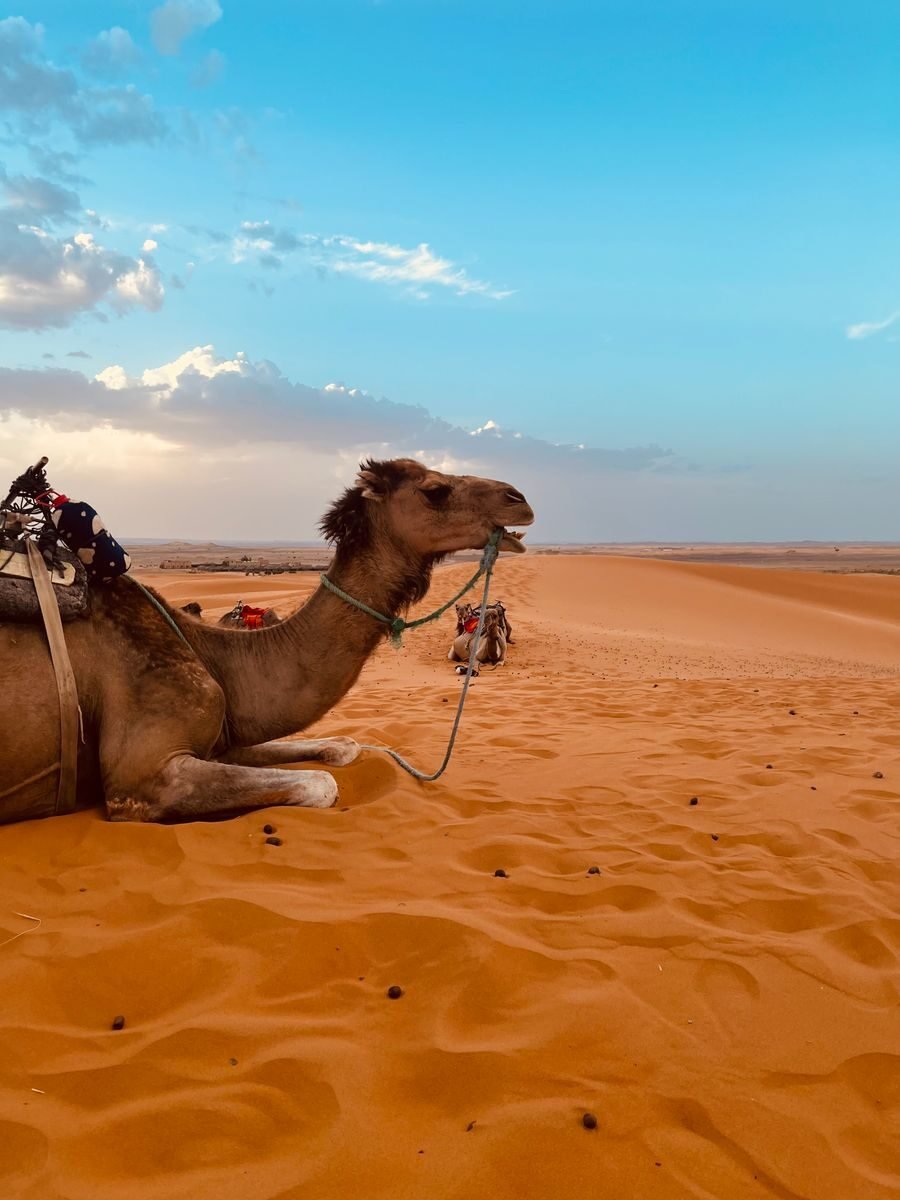
The dromedary camel is often called the “Ship of the Desert.” With its single hump, long legs, and ability to travel long distances without water, it is perfectly suited to desert life.
Camels have played a crucial role in Saharan trade routes for centuries and remain an essential part of desert tourism in Morocco today.
Interesting Facts
- Can travel up to 40 km per day
- Stores fat in its hump for energy
- Can survive several days without drinking water
- Thick eyelashes protect eyes from blowing sand
Fennec Fox
The fennec fox is one of the Sahara’s most recognizable animals. Known for its large ears and adorable appearance, this nocturnal mammal is perfectly adapted to desert living.
Its oversized ears help dissipate heat and allow it to detect prey moving beneath the sand.
Interesting Facts
- Smallest fox species in the world
- Mostly active at night
- Feeds on insects, rodents, birds, and fruits
- Can survive with very little water
Desert Hedgehog
The desert hedgehog is smaller than European hedgehogs and is commonly found across North African deserts.
This nocturnal animal spends much of the day hidden from the sun and emerges at night to search for insects and small prey.
Adaptations
- Excellent hearing
- Protective spines
- Nighttime activity to avoid heat
Sand Cat
The sand cat is one of the Sahara’s most elusive predators. It is specially adapted for life in arid environments and can survive without direct access to water.
Most moisture comes from its prey.
Characteristics
- Thick fur on paws protects against hot sand
- Excellent hunter
- Active mainly at night
- Extremely difficult to spot in the wild
Addax Antelope
The addax is one of the rarest desert mammals in the world.
This endangered antelope can survive in some of the driest regions of the Sahara and may go months without drinking water.
Conservation Status
The addax faces threats from habitat loss and illegal hunting. Conservation programs across North Africa aim to protect remaining populations.
Desert Reptiles
The Sahara hosts many reptiles that have evolved to thrive in hot, dry conditions.
Horned Viper
One of the Sahara’s most famous snakes, the horned viper uses camouflage to blend into sandy environments.
Desert Monitor Lizard
Large and powerful, monitor lizards are skilled hunters found throughout desert regions.
Agama Lizards
These colorful reptiles are often seen basking on rocks and desert outcrops.
Birds of the Sahara
Birdwatchers visiting Morocco’s desert regions may encounter:
- Desert Sparrow
- Egyptian Eagle Owl
- Lanner Falcon
- Desert Wheatear
- Greater Hoopoe-Lark
Many migratory birds also pass through the Sahara during seasonal journeys between Europe and Africa.
Insects and Small Desert Creatures
Despite the harsh environment, the Sahara supports numerous insects and arachnids.
Examples include:
- Beetles
- Ants
- Scorpions
- Desert grasshoppers
- Solifuges (camel spiders)
These creatures play an important role in the desert ecosystem.
Where to See Desert Animals in Morocco
Some of the best places to experience Sahara wildlife include:
- Erg Chebbi
- Erg Chigaga
- Merzouga
- Zagora
- M’Hamid
Guided desert tours offer the best opportunities to learn about local wildlife while exploring Morocco’s spectacular landscapes.
Responsible Wildlife Viewing
When observing desert animals:
- Keep a respectful distance
- Never feed wildlife
- Stay on designated routes
- Avoid disturbing nests and burrows
- Choose eco-friendly tour operators
Protecting the Sahara ecosystem helps preserve these unique species for future generations.
Conclusion
The Sahara Desert is far more than endless sand dunes. It is a thriving ecosystem filled with remarkable animals that have adapted to one of the planet’s toughest environments. From camels and fennec foxes to sand cats, reptiles, and migratory birds, Sahara wildlife offers visitors a fascinating glimpse into nature’s resilience.
A journey through Morocco’s Sahara reveals not only breathtaking landscapes but also an incredible diversity of desert life waiting to be discovered.
Frequently Asked Questions About Desert Animals in the Sahara
1. What animals live in the Sahara Desert?
The Sahara Desert is home to a variety of wildlife, including dromedary camels, fennec foxes, sand cats, desert hedgehogs, horned vipers, monitor lizards, scorpions, and many bird species. These animals have adapted to survive extreme heat and limited water sources.
2. Can you see wild animals during a Morocco Sahara tour?
Yes. Visitors exploring the Sahara Desert in Morocco may encounter wildlife such as desert birds, reptiles, desert foxes, and small mammals. However, many animals are nocturnal and are more active during the cooler evening and nighttime hours.
3. How do Sahara Desert animals survive without much water?
Most Sahara animals have special adaptations that help them conserve water. Some obtain moisture from their food, while others remain inactive during the hottest part of the day and become active at night to reduce water loss.
4. Is the fennec fox found in Morocco’s Sahara Desert?
Yes. The fennec fox is one of the most famous Sahara Desert animals and can be found in parts of Morocco’s Sahara. Its large ears help regulate body temperature and improve hearing, making it well suited for desert life.
5. What is the most iconic animal of the Sahara Desert?
The dromedary camel is considered the most iconic Sahara Desert animal. Known as the “Ship of the Desert,” it has been used for centuries for transportation, trade, and travel across the vast dunes of North Africa.